
Educational policy and practice that promote care reform
This article establishes an evidence-based link between a child’s right to education and the right to family. Miracle Foundation works to ensure that every child has an opportunity to grow up in a family, to become a healthy, happy, educated, income-producing person and experience a true sense of be longing. By leveraging its proprietary Thrive Scale™ methodology, the organization facilitates transitioning children from CCIs back with family or family-based – alternative care options, ensuring fulfilment of children’s rights right where they are in the communities. More than 250 children were sent back home from some of Miracle’s partner CCIs during the first wave of the pandemic. Miracle Foundation had been working to build the capacity of its CCI partners on integrated case management, particularly coining the expedited case management to effect safe and permanent reintegration of children during the emergency crisis situation like the pandemic. Within this larger context of upholding a child’s overall right to family, Miracle Foundation is committed to ensuring that there is no disruption in the educational journey of the child as they walk the reintegration path. The paper brings out how in keeping with its belief, and upholding the spirit of the order of the Supreme Court of India, to cater to the educational needs of children who have been restored with families, Miracle Foundation undertook a mix of hybrid/blended educational interventions. The paper highlights Miracle’s learnings, insights, and challenges in this journey.
Empowering Youth Leaving Care at 18
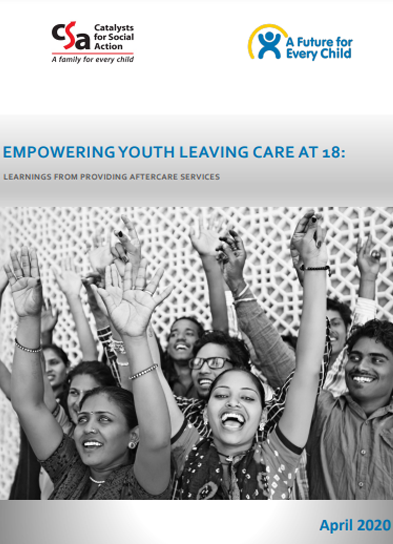
This paper describes a potentially scalable approach to the issue of reintegrating children who have grown up in institutional care into mainstream society when they leave care on turning 18 years. It shares the experience of Catalysts for Social Action (CSA), and A Future for Every Child (AFEC) in implementing the ‘Bridge to Adulthood (B2A)’ program. The program seeks to prepare effectively and equip children in institutional care and CLs with the knowledge and skills necessary to lead a respectable life outside care, and also helps them identify and be trained for a career they wish to pursue. The program has supported 327 Care Leavers(CLs) from June 2016-December 2019. The B2A program addresses gaps in the present system of rehabilitation and reintegration of children in institutional care by: a. Preparing children for life outside institutional care through age-appropriate life skills training to develop self- awareness and confidence, and also become familiar with necessary concepts and tools for an independent life; b. Supporting young adults for higher education and vocational training by helping them develop a career plan based on their interest and aptitude, and gain vocational skills or pursue higher education to become economically self-sufficient; c. Providing mentoring support for two years after job placement to ensure that they are firmly on the path to self-sufficiency, through Program Officers who keep in touch with the CL, to know about their whereabouts and support them where necessary. The paper goes on to give an account of the strategies and outcomes of the implementation of the program in the states of Maharashtra, Madhya Pradesh, Odisha and Goa between June 2016 and December 2019. It presents data of 327 CLs across the four states, describing their demographic characteristics, career choices, job placement statistics, and earning potential. In its conclusion, the paper analyses the program to scale to a large number of CLs, and lists areas of improvement and future work.
Trauma-informed care in the child care and family placement process – Miracle Foundation’s approach within alternative care in India
Trauma-informed care (TIC) is critical in institutional settings to address not only the trauma of experiences that lead children to be enrolled into alternative care such as child care institutions (CCI), but also the inherent trauma that comes from a child being separated from her or his family. M iracle Foundation (henceforth referred to as Miracle) ensures the rights of the child are met while she/he is at an institution while working towards placing every child into a safe, loving family. This article looks at how Miracle Foundation applies principles of trauma-informed care at every stage: from intake and care at a CCI while awaiting placement, to preparing children and families for transition, and finally to monitoring and support post-placement. Following a brief background of the trauma surrounding institutional settings and its damage on children’s development drawn from existing literature, we will define the principles of traumainformed care: safety, choice, collaboration, trustworthiness, and empowerment. The narrative will then illustrate how these principles are applied with children, families, and CCI staff through capacity building, access to counselling and mental health resources, and dedicated guidance by Miracle team members throughout the child care and placement process. Training government officials through a train-the-trainer model equips them to practice a strength-based approach with children and families. Government officials in turn pass this methodology to all CCIs in their purview, broadening our impact multifold. This also positions us for systematic change when it comes to developing all members of the social workforce through system strengthening. By building up a robust mental health program rooted in both prevention and intervention, Miracle has worked to reduce the stigma surrounding mental health prevalent in the South Asian context and ensure the best interest of the child. This will add to the larger body of work on best practices related to applying the theoretical aspects of trauma-informed care on the ground.
Education, poverty and social exclusion: assessment of youth leaving care
In developing nations like India, education has remained inaccessible to many, especially vulnerable children and youth. Upon turning 18 years of age, youth who have lived in child care institutions are expected to leave care and transition into independent life on their own. While they receive basi c education and vocational training in care, it falls short of the quality higher education necessary for a smooth transition towards independent living. In an assessment of the situation of such youth in five States of India, Udayan Care, an NGO working with children and youth found that most of the Care Leavers (CLs) were forced to compromise on education and pursue jobs with low remuneration. This study examines the interrelatedness of education, poverty and social exclusion among CLs through secondary literature and empirical data from Udayan Care’s national study. Analysing the findings from the lens of the Capability Approach, the gaps in provisions of educational support to CLs and subsequent limitations to address challenges of poverty and social exclusion of this population are highlighted, also making recommendations on ways to improve CLs’ outcomes
Home Thrive ScaleTM – Case Management Tool towards Preventing Family Separation and Ensuring Children Thrive in Family-Based and Alternative Care Options
Case management can be a complex process where multiple factors must be considered for the safety and wellbeing of a child in any care option. Miracle Foundation’s proprietary Home Thrive Scale TM is a strengths-based assessment tool that makes it easier to identify strengths, risks, and address are as of support within a family home over time.
Transforming Care – From Institutionalized Care towards Family-based Alternative Care Pilot Project: Final Report
In 2019, Miracle Foundation India collaborated with its 2-partner organisation Child Care Institutions (CCIs)/ Children Home Gokul Balika Ashram for girls run by Matrumandir located in Devrukh – Ratnagiri Dst. Maharashtra & AARAMBH Boys home located in Indore Dst. Madhya Pradesh is a part of its pil ot project with the goal to ‘create a replicable model for other CCIs to effectively implement Family-Based & Alternative Care through systemic change by engaging multiple stakeholders. As reflected in the goal, stakeholder engagement, sustainability, holistic approach and children’s best interest were at the core of the project.
First International Care Leavers’ Convention: Event Report
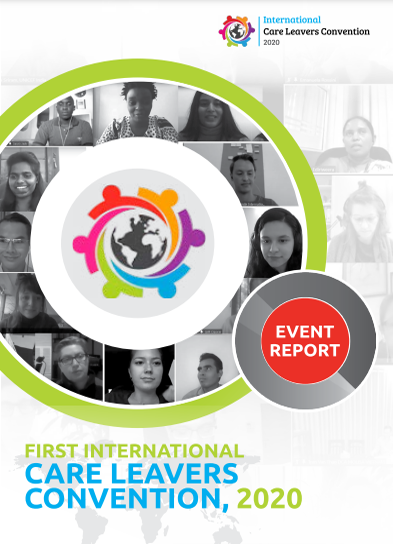
Udayan Care (India), SOS Children’s Villages, University of Hildesheim (Germany) and Kinderperspectief (Netherlands) joined hands in March 2020 to convene the first-ever international convention for Care Leavers, and it was planned in New Delhi, India, in March 2020. The organising committee closely observed the developments from March to August and continued to virtually meet and engage with the Care Leavers transnationally. A landscape survey was followed by a series of webinars from June-July with 100 young Care Leavers globally to understand the challenges they were going through during the pandemic and their needs around COVID-19. 11 gaps were identified, thus setting forth a set of recommendations in the form of “Care Leavers Declaration” to mitigate these risks. This report is a compilation of different stages of the whole convention, its various components and discussions which happened across the two months period and aims to serve as a guidebook for Care Leaver networks and organizations working with Care Leavers to seek inputs from, as well as for policymakers to understand this cohort better to develop policies in keeping with their dreams and aspirations. The report hopefully would serve as a tool for the planning of the next International Care Leavers Convention in 2022, led by Care Leavers themselves.
Leaving Care Policy Development: A brief for policy makers

The process of leaving care is a transnational and global challenge. Even though there are several variations between care-leaving policies and the availability of support worldwide, the challenges faced by Care Leavers are similar everywhere. Most countries lack a clear policy on leaving care. Care Leavers often become nobody’s responsibility and data systems in most countries are not well established. Consequently, most Care Leavers worldwide face challenges in housing, education, employment, mental health and psycho-social wellbeing and social support networks. A policy on leaving care must primarily aim to improve the life opportunities of Care Leavers as they transition to independent living. Any such policy must aim to improve their life outcomes and prepare them to leave care smoothly; support their active participation in decision making, and provide adequate and appropriate aftercare support. This policy brief puts together the key guiding principles that can support policy makers while developing policies on leaving care, as expressed by Care Leavers themselves, during the 1st International Care Leavers Convention 2020.
Compendium on Family Strengthening and Alternative Care in India

Commissioned by Changing the Way We Care, through IACN, the Compendium, is a collection of existing practices on family strengthening and alternative care, that offers us a glimpse into the approaches adopted by various agencies across the country. It serves as a good resource to both practitioners as well as policymakers, as it offers us insights into what works well and aspects that are currently posing a challenge requiring a solution.
Mapping the Situation of Children aged 15 years and above and Residing in Bihar Child Care Institutions
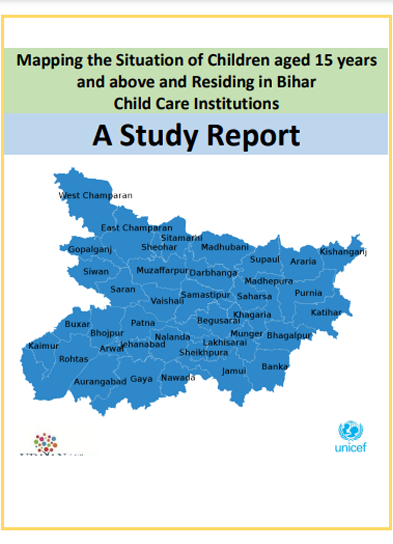
A Study Report